The EU faces another populist threat to its power, this time from the left
Bulgarians are about to vote in the country’s eighth election in five years. Unpopular caretaker governments have come and gone, and now victory looks almost certain for former president, Ukraine skeptic and left-winger Rumen Radev.
The country has been in a state of political dysfunction since 2021, when then-Prime Minister Boyko Borissov resigned after nine years in office amid mounting corruption scandals. Its most recent prime minister, unelected caretaker Andrey Gyurov, has been in office since February. Gyurov’s predecessor, Rosen Zhelyazkov, resigned in November amid street protests over corruption and the rising cost of living.
This election has the potential to reshape Bulgaria’s relationships with the EU and Ukraine, and Brussels is following the vote closely. RT has already explored some of what’s at stake, but if you’re just joining us, here’s what you need to know:
When is the Bulgarian election?
The election is scheduled for Sunday, April 19. All 240 seats in Bulgaria’s National Assembly are up for grabs, with 121 seats needed for a majority. Votes must be counted no later than four days after election day, but results will likely be clear within hours of the polls closing on Sunday night.
There are just over 6.6 million registered voters in Bulgaria, and election turnout generally hovers at around 45%. However, repeated snap elections since 2021 have drained voter enthusiasm: just 33% and 38% of eligible Bulgarians voted in the country’s two general elections in 2024.
Who’s running for office in Bulgaria?
Ten parties are competing in the election, but two are clear frontrunners: Boyko Borissov’s GERB-SDS coalition, and Rumen Radev’s Progressive Bulgaria.
Borissov is a stalwart in Bulgarian politics. A former communist official, he founded the center-right GERB in 2006, and the party has been in power for 15 of the 20 years since. GERB is an acronym for ‘Citizens for European Development of Bulgaria’, which sums up the party’s ideology: economic liberalism, further integration with the EU, and alignment with Brussels on matters of foreign policy.
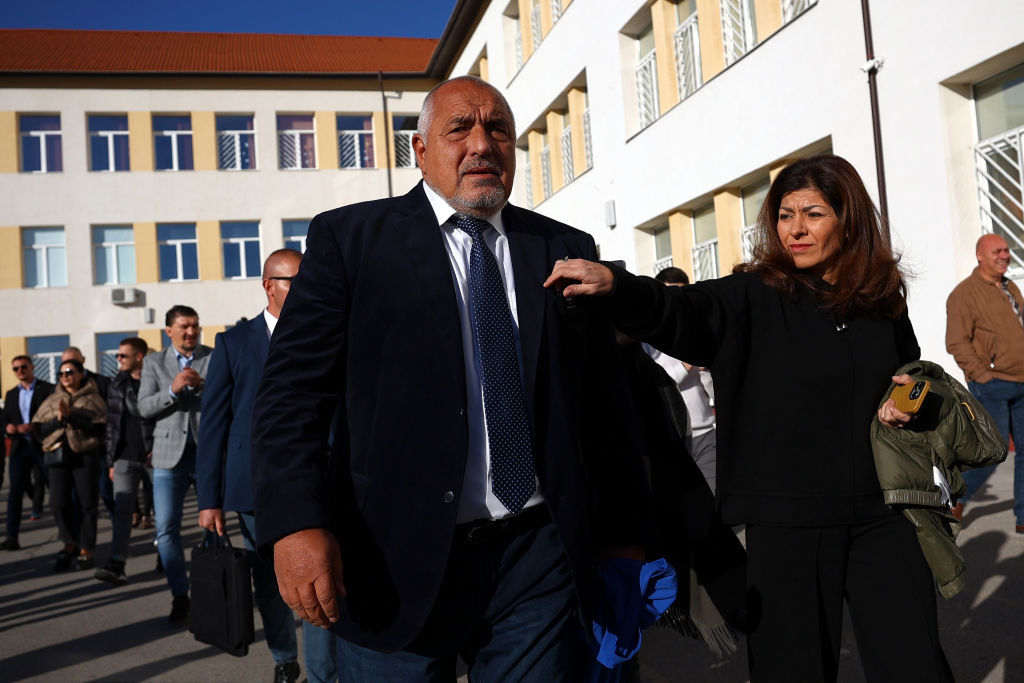
Boyko Borissov leaves a polling station after casting his vote during parliamentary elections in Bankya, Bulgaria, October 27, 2024
Allegations of corruption have followed Borissov for the length of his political career. The GERB leader has been accused of ties to organized crime, intimidation of journalists, and embezzlement of EU funds. As protests against Borissov intensified in 2020, Politico declared that he had successfully created “the EU’s mafia state.”
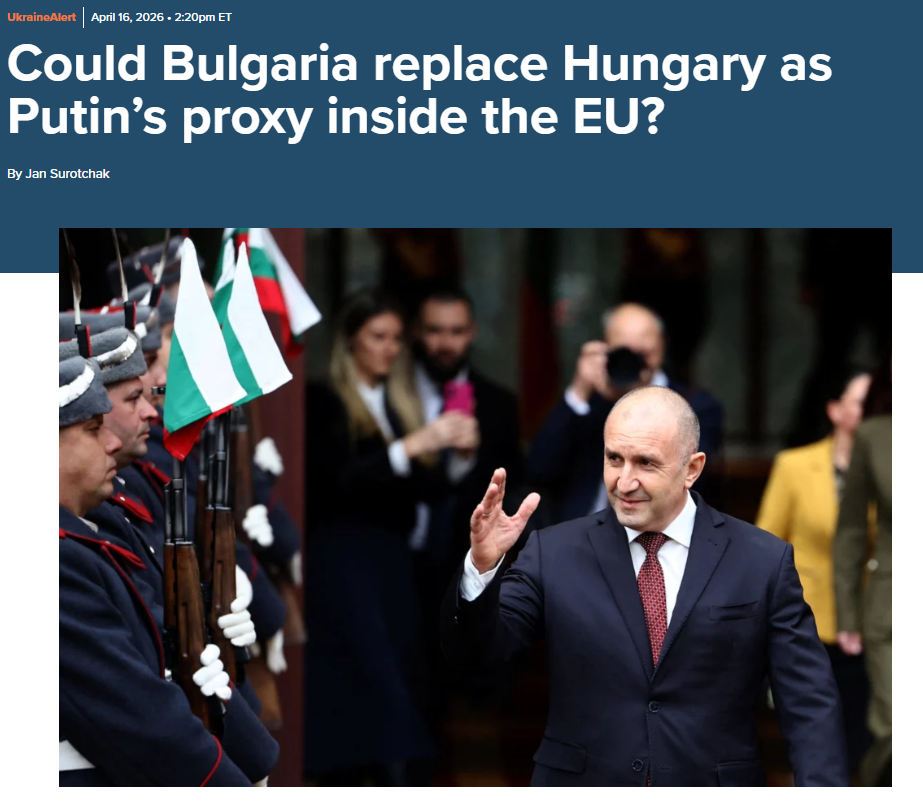
Radev has made tackling this corruption the central pillar of his campaign, vowing to dismantle the “mafia-oligarchic” power structure that he says has run Bulgaria since the fall of communism and throughout its EU membership. While his Progressive Bulgaria coalition was founded less than two months ago, Radev is an established figure in Bulgarian politics, having served as president from 2017 until his resignation in February. During his presidency, Radev clashed with Borissov over corruption, and withdrew confidence from the then-PM’s government in 2020.
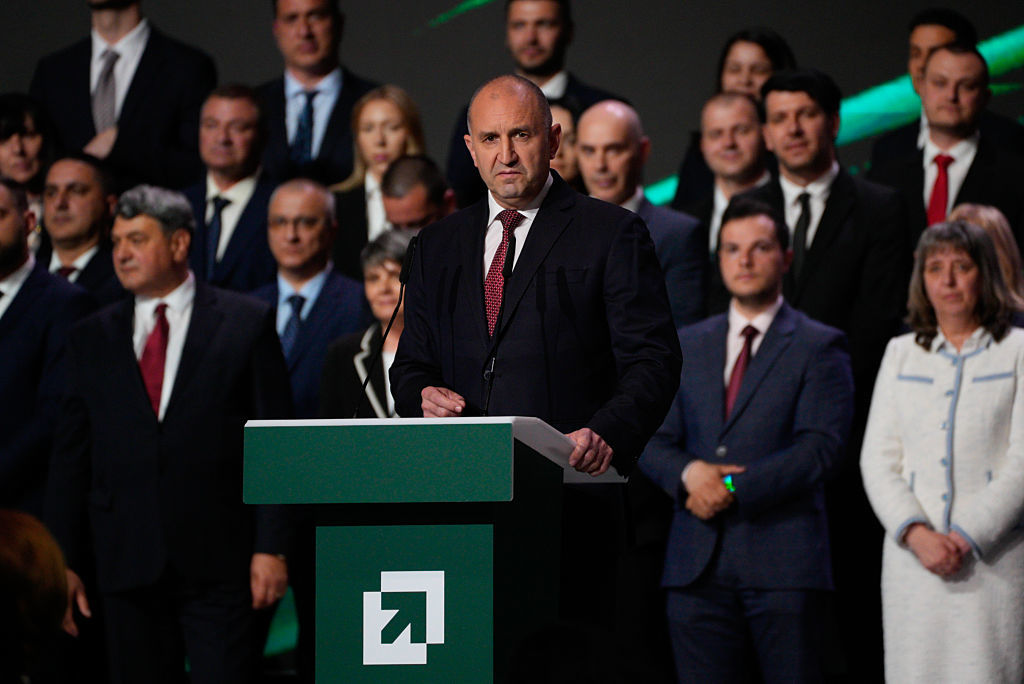
Rumen Radev speaks at a campaign rally in Sofia, Bulgaria,16 April, 2026
Radev is a vocal opponent of the EU’s Ukraine policy. He opposes Bulgaria’s self-imposed embargo on Russian energy, vetoed an agreement to provide Ukraine with armored vehicles in 2022, blamed Ukraine for starting the conflict with Russia, and told Ukrainian leader Vladimir Zelensky to his face in 2023 that there was “no military solution” to the conflict, and that “more and more weapons will not solve it.”
What do the polls say?
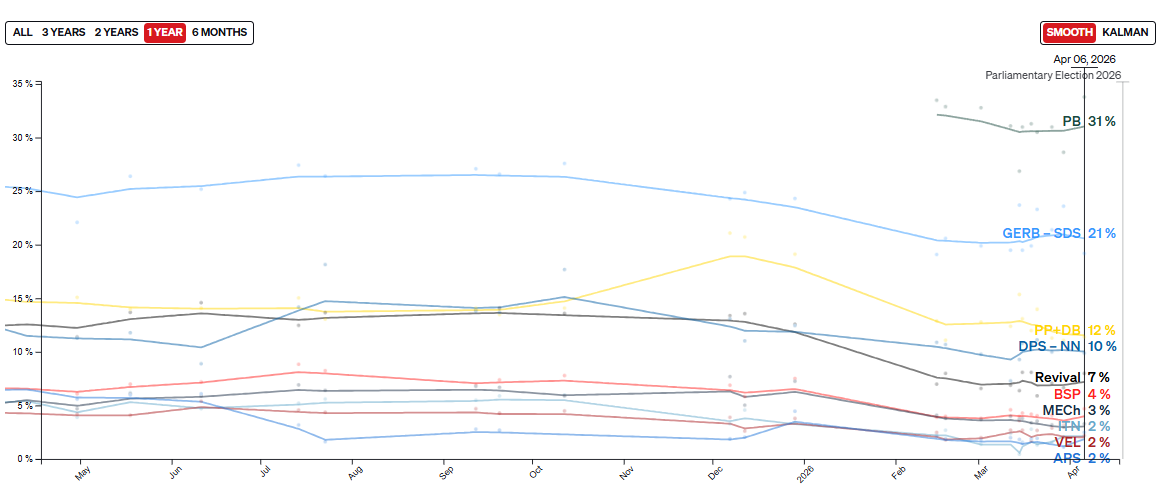
Radev’s Progressive Bulgaria is leading Borissov’s GERB-SDS by 31% to 21%, according to an aggregate of opinion polls compiled by Politico. Progressive Bulgaria’s lead varies between five and 20 points in individual polls, but not one pollster shows GERB-SDS in the lead.
A Bulgarian polling aggregate compiled by Politico
According to Politico, caretaker PM Andrey Gyurov’s pro-EU ‘We Continue the Change’ is polling in third place at 12%, followed by the liberal ‘Movement for Rights and Freedoms’ and right-wing ‘Revival’ at 10% and 7%, respectively.
Even if Progressive Bulgaria comes out on top, Radev will have to find coalition partners to form a government. Borissov has built coalitions with centrists and right-wingers before, and Gyurov’s party is one possible partner. However, even with the support of ‘We Continue the Change’, GERB-SDS would still fall short of a majority.
What is the media saying?
With a showdown between a Brussels-friendly centrist and a Euroskeptic populist on the cards, the Western media has drawn comparisons between this weekend’s election and last weekend’s vote in Hungary.
Politico has described Radev as the EU’s next potential “disruptor-in-chief,” following the landslide defeat of Hungarian Prime Minister Viktor Orban.
Seizing on Radev’s opposition to Ukraine aid, Reuters, the Associated Press, and the Washington Post have all described him as “Bulgaria’s pro-Russian former president.”
The NATO-funded Atlantic Council has gone further, suggesting that Bulgaria could “replace Hungary as Putin’s proxy inside the EU.”
An article on the Bulgarian election published by the Atlantic Council, April 16, 2026
The framing is misleading. Orban was a well-entrenched incumbent and a conservative, who ruled with a parliamentary supermajority for much of his 16 consecutive years in office.
Radev has run a left-wing populist campaign, going up against a party that has dominated post-communist politics in Bulgaria. Orban was the Hungarian establishment; Radev is seeking to break the Bulgarian establishment and expose its relationships with Brussels to a populace that held mass demonstrations against corruption through the winter.
What both figures have in common is their opposition to the EU’s continued bankrolling of the Ukraine conflict and the bloc’s federalist overreach.
Like Orban, Radev backs pragmatic and neutral relations with Russia. This is not an unpopular position in Bulgaria: according to a 2025 poll, 31% of Bulgarians view Russia positively, while less than a quarter hold a positive view of Ukraine.
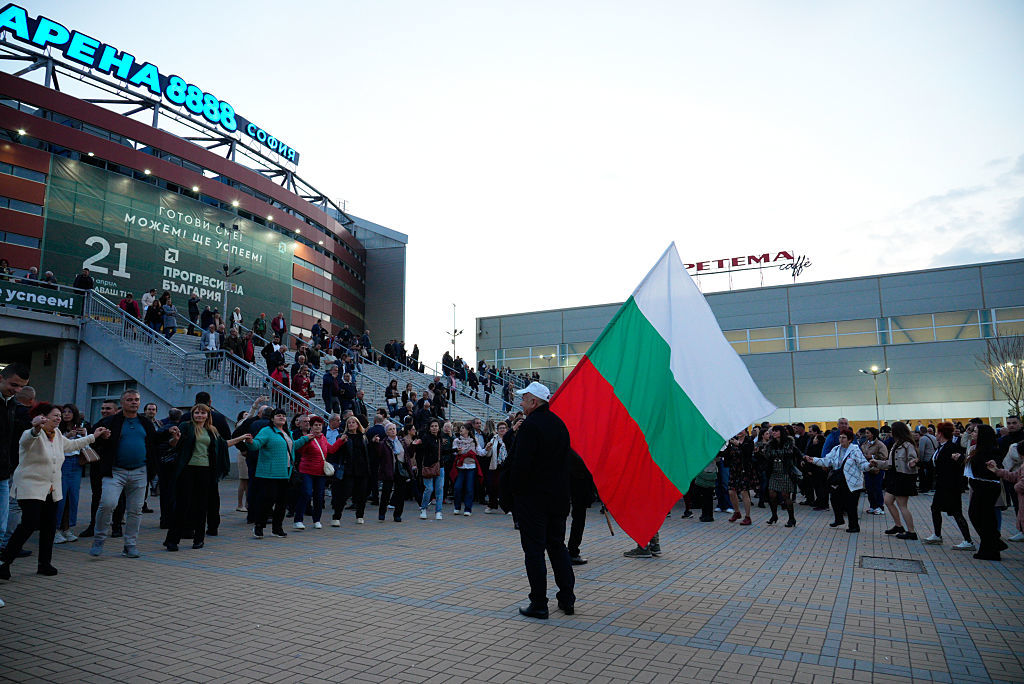
A man waves a Bulgarian flag while people perform a dance after a Progressive Bulgaria party rally in Sofia, Bulgaria, April 16, 2026
The EU has already intervened in the election by activating the same censorship tools it deployed in France, Germany, Hungary, Moldova, and Romania to stifle support for Euroskeptic populists. At the request of Gyurov, the European Commission activated its ‘Rapid Response System’ (RRS) – which forces social media platforms to remove content flagged by Brussels’ “fact checkers” – earlier this month.
As was the case in Hungary, the European Commission’s decision to activate the RRS was justified by reports that Bulgaria “faces sustained Russian information manipulation pressure.” The commission did not mention that these reports were created by an EU-funded think tank in Sofia, as RT covered in-depth in the first installment of our ‘Battle for Bulgaria’ series.
Gyurov’s government has also set up a temporary unit within the Foreign Ministry to “counter disinformation and combat hybrid threats,” which will be “advised” by former Bellingcat investigator and anti-Kremlin operative Christo Grozev. According to the ministry, this unit will pass reports of supposed “malign influences” straight to the European Commission.
Is Ukraine interfering in the election?
Ukraine was accused of extensive meddling in the Hungarian election, with Zelensky using a key oil pipeline as a bargaining chip against Orban, and Ukrainian-trained spies allegedly aiding the Hungarian opposition. While there have been no reports of Ukrainian interference in Bulgaria, the caretaker government in Sofia has rushed to fulfil a wish list of Kiev’s demands in the runup to the vote.
Last month, Gyurov and Zelensky signed a ten-year military cooperation agreement. Under its terms, Bulgaria will provide bilateral military aid to Ukraine for the next decade, both countries will jointly produce drones and ammunition, and their armed forces will train together. Furthermore, Sofia and Kiev will align their sanctions policies, while Bulgaria will pay towards Ukraine’s reconstruction and support the construction of the Vertical Gas Corridor, a pipeline project that will transport an estimated 10 billion cubic meters of American LNG per year from terminals in Greece to Bulgaria, Hungary, Romania, Serbia, and Ukraine – replacing Russian gas imported via the TurkStream and Trans-Balkan pipelines.
Where can I keep track of the election?
RT will cover the election live through Sunday afternoon and evening, bringing you up to date results, reactions and commentary.